NIST Cybersecurity Framework: Functions, Tiers and Profiles
The framework arrives attached to an insurance form or a customer questionnaire, and the question behind it is always the same: are we obliged to do this? The answer is written into the statute that created it, and almost nobody quotes that statute.
The framework usually arrives sideways. A cyber insurance application asks which framework you follow. A customer's questionnaire has a column headed CSF Function and expects something in every row. A board member reads an article and asks whether the company is NIST compliant. None of those has a clean yes or no answer, because the thing being asked about was built to be something other than a test you pass or fail.
What the National Institute of Standards and Technology publishes is a shared vocabulary for cybersecurity outcomes, given away free, by an agency with no authority to make anyone use it. That is not a weakness in the design. It is the design, written into law, and knowing it changes how you answer all three questions.
What Is the NIST Cybersecurity Framework?
NIST is a non-regulatory agency of the US Department of Commerce, and the current edition of its framework is NIST CSWP 29, The NIST Cybersecurity Framework (CSF) 2.0, published on February 26, 2024. It runs to about thirty pages, which surprises people expecting a standard. Most of that length is a list of outcomes.
The document describes itself as a taxonomy of high-level cybersecurity outcomes usable by any organization regardless of size, sector or maturity, and it is explicit that it does not prescribe how those outcomes should be achieved. That is the whole character of the thing. It tells you suppliers should be known and prioritized by criticality. It does not tell you to buy a vendor risk platform, review suppliers quarterly, or score them out of ten.
Three components make it up, and confusing them is the most common source of nonsense in vendor questionnaires: the CSF Core, a hierarchy of Functions, Categories and Subcategories written as outcomes; CSF Organizational Profiles, which describe where you are and where you intend to be in the Core's language; and CSF Tiers, four descriptions of how rigorous your risk practices are.
The Six Functions of the NIST CSF
The Functions are the level everyone quotes and the level a non-technical executive can hold in their head. Each is named after a verb, and NIST writes each one as a state of affairs rather than an activity.
| Function | NIST's outcome | Categories | What it covers |
|---|---|---|---|
| Govern (GV) | The cybersecurity risk management strategy, expectations and policy are established, communicated and monitored | 6 | Organizational context, risk strategy, roles, policy, oversight, supply chain |
| Identify (ID) | The organization's current cybersecurity risks are understood | 3 | Asset management, risk assessment, improvement |
| Protect (PR) | Safeguards to manage cybersecurity risks are used | 5 | Access control, training, data security, platform security, infrastructure resilience |
| Detect (DE) | Possible cybersecurity attacks and compromises are found and analyzed | 2 | Continuous monitoring, adverse event analysis |
| Respond (RS) | Actions regarding a detected cybersecurity incident are taken | 4 | Incident management, analysis, reporting, mitigation |
| Recover (RC) | Assets and operations affected by an incident are restored | 2 | Recovery plan execution, recovery communication |
Read down the middle column and you can see why the framework survived. Nothing in it is a product category. Protect covers multi-factor authentication under PR.AA without naming it, because the outcome NIST wants is that identities are managed and access is granted appropriately, and a company running hardware keys and a company running an authenticator app can both claim it honestly. Respond assumes an incident response plan you can execute under pressure, and RS.MA-01 says only that the plan is executed in coordination with relevant third parties once an incident is declared.
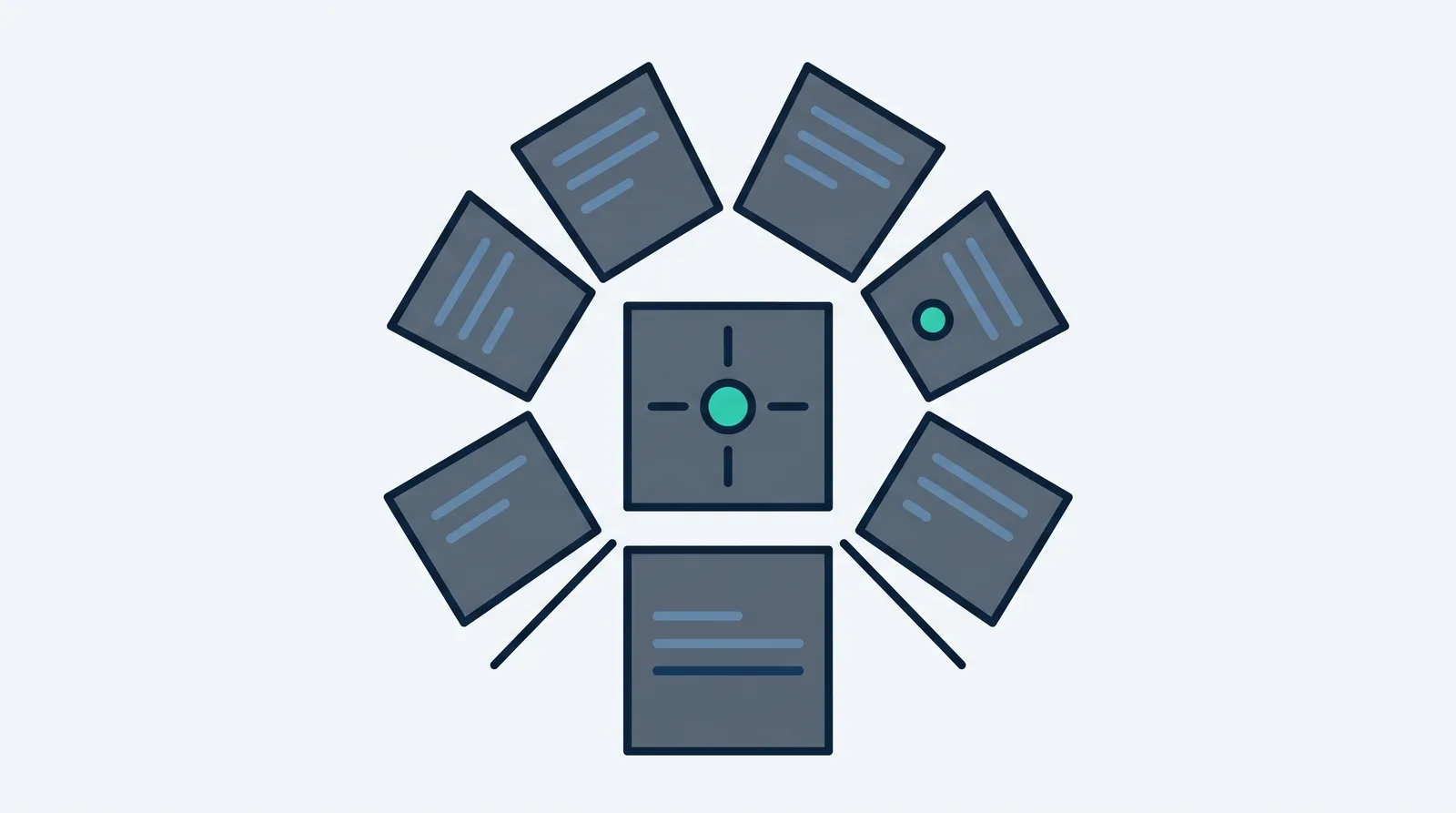
Govern sits at the center of NIST's own diagram, because it informs how an organization implements the other five. That is where the framework quietly disagrees with how most companies buy security. Detection tooling is a purchase. Deciding who is accountable, what risk the business will tolerate and which suppliers matter is not, and CSF 2.0 puts 31 of its 106 outcomes in Govern to make the point.
What Changed in NIST CSF 2.0
Two of the three highest ranking explainers for this topic still describe five functions, which tells you how quietly the 2024 revision landed. The changes matter because they alter what an honest answer to a questionnaire looks like.
- Executive Order 13636, Section 7, directs the NIST Director to lead development of a Cybersecurity Framework for critical infrastructure
- Version 1.0 is issued, with five functions and the title Framework for Improving Critical Infrastructure Cybersecurity
- The Cybersecurity Enhancement Act of 2014 becomes Public Law 113-274, putting the work into statute and capping what NIST may require
- Executive Order 13800 makes the framework binding on federal agency heads for managing their own cybersecurity risk
- Version 1.1 adds supply chain risk management and coordinated vulnerability disclosure
- Version 2.0 adds the Govern function, drops the critical infrastructure title, and applies to organizations of all sizes and sectors
Govern is the headline, and the retitling is the underrated part. Before 2.0 the document was called the Framework for Improving Critical Infrastructure Cybersecurity, and a dentist or a software startup reading it had to translate. NIST dropped that title and now addresses industry, government, academia and nonprofits of any size directly.
Supply chain was promoted at the same time. In version 1.1 it was a category inside Identify. In 2.0 it is GV.SC, sits under Govern, and carries ten subcategories running from GV.SC-01, establishing a program, to GV.SC-10, which covers what happens after a supplier relationship ends. The reasoning is visible in the incident data: the 2026 Verizon Data Breach Investigations Report found third-party involvement in breaches up 60 percent, with breaches involving a third party now accounting for 48 percent of all breaches. Roughly half of incidents arrive through somebody else's environment, which is a governance problem before it is a technical one, and supply chain attacks do not respect the boundary of your own network.
What Are the CSF Implementation Tiers?
Tiers describe the rigor of an organization's cybersecurity risk governance and risk management practices. There are four, and NIST's names for them are Partial, Risk Informed, Repeatable and Adaptive.
- Tier 1, Partial. Risk strategy is applied ad hoc, prioritization is not formally based on objectives or the threat environment, and the organization is generally unaware of the risks its suppliers carry.
- Tier 2, Risk Informed. Management has approved risk practices but they are not organization-wide policy, and risk assessment happens without being repeatable or recurring.
- Tier 3, Repeatable. Practices are formally approved and expressed as policy, methods for responding to changes in risk are consistent, and senior executives communicate regularly about cybersecurity risk.
- Tier 4, Adaptive. Cybersecurity risk is monitored in the same context as financial risk, and the budget follows an understanding of the current and predicted risk environment.
Nobody assigns you a tier. You select one, you can select different tiers for governance and for management, and the honest use of them is internal: a shared benchmark that stops a security conversation from becoming an argument about adjectives.
What Is a CSF Organizational Profile?
A profile is the framework applied to one organization, written in the Core's language, and it comes in two halves. A Current Profile records the outcomes you are achieving now and to what extent. A Target Profile records the outcomes you have prioritized, allowing for changes you can see coming, such as a new product, a new regulator or a technology you are about to adopt.
The gap between the two is the point. NIST sets out five steps: scope the profile, gather the information, create it, analyze the gaps between current and target and turn them into a prioritized action plan, then implement that plan and update the profile. A profile can cover the whole organization or one system, and you can hold as many as you find useful.
A Community Profile is a baseline of CSF outcomes published for a sector, a technology or a threat type. Where one exists for your industry it saves you the argument about which outcomes matter most, because a group of peers has already had it. NIST hosts them, with profile templates and quick start guides, on the CSF website.
Is the NIST Cybersecurity Framework Mandatory?
For a private company in the United States, no. Not by law, not by any regulator, and not in a way that produces a fine. The reason is unusually well documented, because Congress wrote the limits into the statute that authorizes the work.
One group is bound. Executive Order 13800 of May 11, 2017, at Section 1(c)(ii), tells each federal agency head that effective immediately they shall use the framework, or any successor document, to manage the agency's cybersecurity risk. Federal agencies use the CSF because a president ordered them to. A private company faces no equivalent instruction.
The Federal Trade Commission has been direct about what that means. In a 2016 post on its business blog the FTC wrote that "there's really no such thing as 'complying with the Framework'", and explained that the things the framework asks an organization to evaluate are the things the FTC has evaluated for years under Section 5 of the FTC Act when deciding whether a company's data security was reasonable. The framework is not the standard the FTC enforces. It is a decent map of the territory the FTC looks at.
The pressure comes instead from contracts, insurance applications, and requirements that genuinely do bind. HIPAA's Security Rule is federal law for covered entities and their business associates. PCI DSS is not law but is enforced through card brand agreements with real financial consequences. State breach notification statutes are law in every state. The CSF sits underneath all of them as a way of arranging the work, and satisfies none of them by itself.

How to Implement the NIST Cybersecurity Framework
Starting at the top of the Core and working down reads as an enormous undertaking. NIST publishes a shorter route for smaller organizations: the CSF 2.0 Small Business Quick-Start Guide, NIST SP 1300, which selects a handful of outcomes per function and tags each with its subcategory identifier so you can find the full text later.
Do not start by buying a CSF platform. The first pass costs nothing but attention, and a tool that automates evidence collection has no idea which of your suppliers is critical.
NIST CSF vs ISO 27001 and SOC 2
These three come up in the same procurement conversations and answer different questions. Reading the table in the wrong direction is how a company pays for an audit nobody asked for.
| NIST CSF 2.0 | ISO 27001 | SOC 2 | |
|---|---|---|---|
| Published by | NIST, a US government agency | ISO, an international standards body | The AICPA, the US accountancy body |
| What you get | Nothing. It is guidance | A certificate, valid three years | A CPA firm's report and opinion |
| Who assesses you | Nobody, unless you hire someone | An accredited certification body | A licensed CPA firm |
| What a buyer asks for | Rarely requested by name | Common outside the US | The default US enterprise request |
The CSF is the map and the other two are the exams. A company that has organized its program around the six functions arrives at either engagement with most of the thinking done, because the evidence an auditor wants is generated by the same outcomes. If a customer is asking for a SOC 2 report, a CSF profile is not a substitute, and the way ISO 27001 and SOC 2 differ decides which one to work toward first.
Who Uses the NIST Cybersecurity Framework?
Federal agencies use it because Executive Order 13800 requires it. Everyone else uses it because it is free, because it is written in language an executive can follow, and because it structures a security conversation without depending on what anyone is selling.
Key takeaways
- The NIST Cybersecurity Framework is voluntary guidance published free by NIST. Version 2.0, NIST CSWP 29, dates from February 26, 2024.
- The Core holds 6 Functions, 22 Categories and 106 Subcategories, each written as an outcome with a citable identifier such as GV.SC-04.
- Version 2.0 added Govern, dropped the critical infrastructure title, and moved supply chain risk management under Govern with ten subcategories.
- The four Tiers, Partial through Adaptive, describe the rigor of your risk practices. They are not a maturity score and nobody awards them.
- Profiles are the working part: a current profile, a target profile, and a prioritized plan built from the gap between them.
- Nothing in US law requires a private company to use the CSF. Public Law 113-274 says the Act confers no regulatory authority and bars NIST from requiring specific solutions.
- Executive Order 13800 does require federal agency heads to use it, which is why federal expectations and private ones feel different.
Common questions
Is the NIST Cybersecurity Framework mandatory?
Not for private companies. The Cybersecurity Enhancement Act of 2014 states that nothing in it confers regulatory authority on any agency, and it bars NIST from requiring specific solutions. Executive Order 13800 does make the framework mandatory for federal agency heads managing their own cybersecurity risk.
What are the six functions of the NIST CSF?
Govern, Identify, Protect, Detect, Respond and Recover. Govern was added in version 2.0 and covers strategy, roles, policy, oversight and supply chain risk. NIST puts it at the center of its diagram because it informs how the other five get implemented.
Can you be NIST CSF certified?
No. There is no certification body, no registry and no audit standard attached to the framework. A consultancy can assess you against the Core, and that report is its opinion rather than a certificate. A vendor claiming to be NIST CSF certified is describing something that does not exist.
What is the difference between NIST CSF 1.1 and 2.0?
Version 1.1, from April 2018, had five functions, 23 categories and 108 subcategories, under the title Framework for Improving Critical Infrastructure Cybersecurity. Version 2.0 has six functions, 22 categories and 106 subcategories, adds Govern, drops that title, and promotes supply chain risk management into its own category under Govern.
What are the NIST CSF implementation tiers?
Four descriptions of how rigorous your risk governance and risk management practices are: Tier 1 Partial, Tier 2 Risk Informed, Tier 3 Repeatable and Tier 4 Adaptive. You select your own, they are not awarded, and NIST frames a move upward as worthwhile when risk or mandates justify the cost.
What is the difference between the NIST CSF and NIST SP 800-53?
The CSF describes outcomes; SP 800-53, Security and Privacy Controls for Information Systems and Organizations, is the detailed control catalog. CSWP 29 treats one 800-53 control as one of several informative references that might help achieve a single subcategory. Federal systems work to the catalog. The CSF is the layer above it.
Is the NIST Cybersecurity Framework the same as NIST 800-171?
No. SP 800-171 covers protecting controlled unclassified information in nonfederal systems and reaches companies through contract clauses rather than through the CSF. Using the framework does not satisfy an 800-171 obligation, though the two overlap in substance.
How long does it take to implement the NIST Cybersecurity Framework?
There is no finish line, because there is no assessment at the end. A first pass through the Small Business Quick-Start Guide, producing an asset inventory, an obligation list and a named owner, is a few weeks of part-time effort. Closing the gaps a current profile exposes takes as long as the gaps take.
Does following the NIST CSF satisfy HIPAA or PCI DSS?
No. HIPAA's Security Rule is federal law with its own required and addressable specifications, and PCI DSS has numbered requirements enforced through card brand agreements. The CSF can organize the work that supports both, and neither accepts it as evidence of compliance in its own right.
Is the NIST Cybersecurity Framework free?
Yes. CSWP 29, the quick start guides, the implementation examples, the community profiles and the reference tool are published free by NIST, and the framework carries no license fee or membership requirement. The costs of using it are the costs of doing the work it describes.
On this page
- What Is the NIST Cybersecurity Framework?
- The Six Functions of the NIST CSF
- What Changed in NIST CSF 2.0
- What Are the CSF Implementation Tiers?
- What Is a CSF Organizational Profile?
- Is the NIST Cybersecurity Framework Mandatory?
- How to Implement the NIST Cybersecurity Framework
- NIST CSF vs ISO 27001 and SOC 2
- Who Uses the NIST Cybersecurity Framework?

Daniel Reyes
Daniel Reyes is a CISSP who spent twelve years in security operations, most recently leading a detection and response team for a mid-sized healthcare group in Texas. He reviews every resource and breach report on Cyber Security Firms for technical accuracy before it publishes.
Most of the people he has trained arrived having been told too much: a dozen acronyms, six vendors, and no clear idea which risk was theirs. His approach is to explain what an attack actually does before naming the tool that stops it, on the basis that most breaches start with something a reader could have recognised.