SOC 2 Type 1 vs Type 2: Which Report Do You Need?
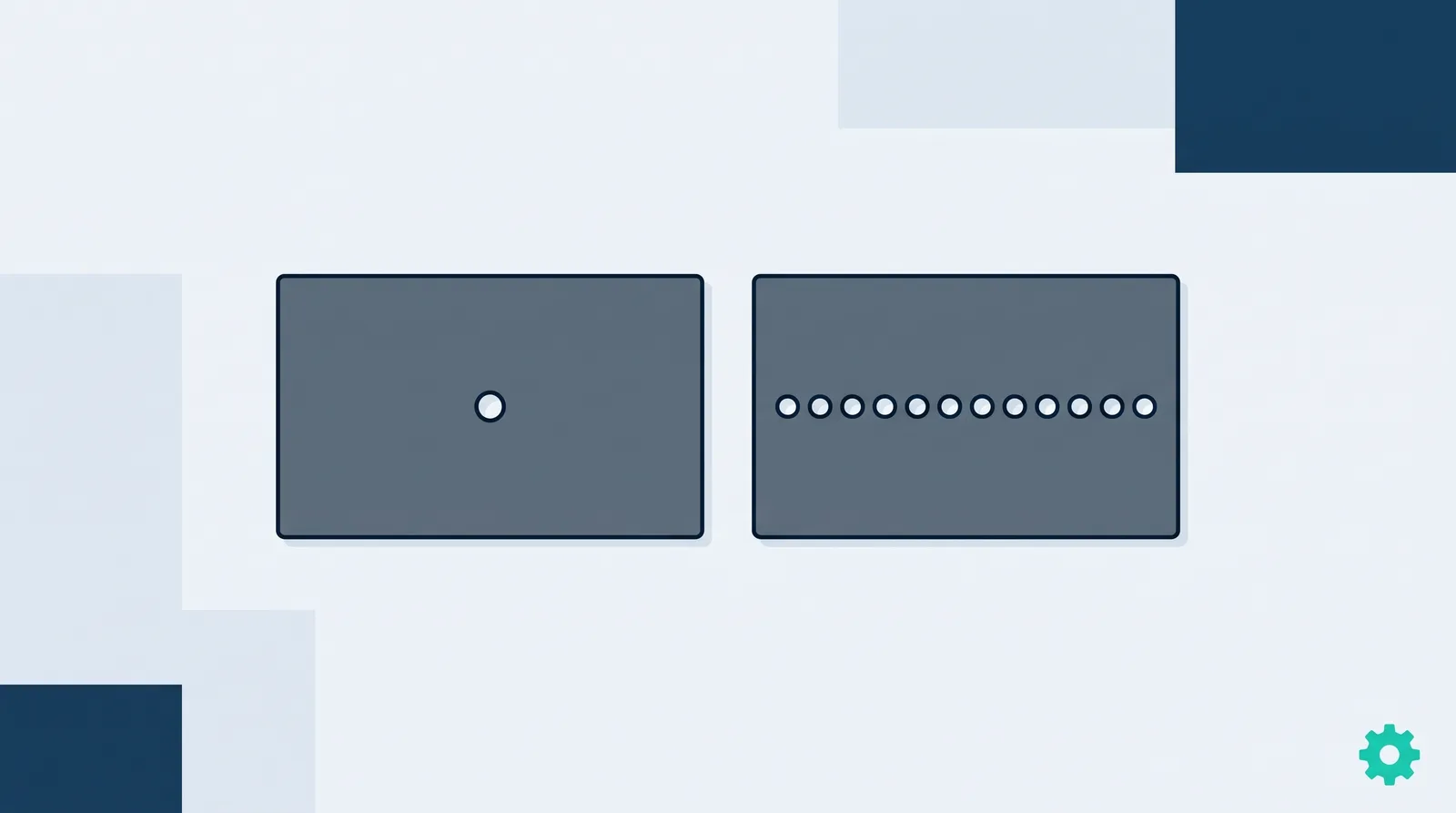
Both reports come from the same auditor, cover the same criteria and carry the same logo. One of them says your controls were designed properly on a Tuesday. The other says they ran every day for months, and that difference is the whole product.
The security questionnaire comes back with one line highlighted, and the line says Type 2. Nobody at your company knows whether that is different from the Type 1 an auditor quoted you last month, whether the difference is worth the money, or whether saying yes to the wrong one burns four months you do not have. The two reports look almost identical from the outside. Same CPA firm, same criteria, same section headings, same restricted use notice on the cover.
The difference is a calendar. A Type 1 is an opinion about one day. A Type 2 is an opinion about a stretch of days, and no amount of budget, tooling or urgency shortens a stretch of days. Understanding what a SOC 2 report is gets you to the door; understanding which type you can credibly produce, by when, is what actually answers the questionnaire.
SOC 2 Type 1 vs Type 2 Compared
| Type 1 | Type 2 | |
|---|---|---|
| What the auditor opines on | Whether controls were suitably designed | Whether controls were suitably designed and operated effectively |
| Time covered | A single specified date | A stated period, commonly three to twelve months |
| Evidence examined | The control as it stands on that date | Samples drawn from across the whole period |
| Testing | Inspection of design, walkthroughs | Design plus tests of operating effectiveness, sampled |
| Exceptions | Design deficiencies, if any | Every instance where a control did not operate as described |
| What the report contains | Opinion, management's assertion, system description | The same, plus the tests performed and their results |
| How fast you can have one | Weeks, once readiness work is finished | Months, because the period has to elapse first |
| Relative cost | Lower | Higher, and the gap widens with the number of controls tested |
| Renewal | One off, and it does not renew into anything | A fresh examination every year, periods running back to back |
| What a buyer reads it as | A statement of intent with a date on it | Evidence that the controls survived contact with a real quarter |
| Who typically accepts it | A buyer waiting on a first report, usually once | Enterprise vendor risk teams, as a standing requirement |
Two things a table cannot carry. The first is that these are not competing products. A Type 1 is not a lighter grade of Type 2; it is a different question put to the same auditor about the same control set, and most companies that buy one end up buying the other within a year. The second is that the criteria do not change between them. The trust services criteria you select, the system you describe and the controls you write are identical. What changes is how much of your own history the auditor gets to look at.
What Is a SOC 2 Type 1 Report?
A Type 1 examination answers one question: on this date, were the controls described in your system description suitably designed to meet the criteria you selected? The auditor reads your description, walks through each control with the people who run it, inspects configuration and documents, and forms an opinion about design. Then the report is dated, and the opinion attaches to that date and to nothing else.
That is a narrower claim than most first time readers assume, and the narrowness is deliberate rather than a defect. A well designed control is a real thing. An access review that names an owner, a cadence, an evidence artifact and an escalation path is meaningfully better than one that exists as a sentence in a policy nobody has read. The Type 1 confirms that the machinery exists and is pointed in the right direction. It says nothing about whether anyone turned it on the following Monday.
The reporting format is current, not legacy. The AICPA's illustrative service auditor's report for a SOC 2 type 2 examination meets the requirements of SSAE-21, effective for service auditor reports dated on or after June 15, 2022, and the AICPA notes that similar changes may be needed for SOC 2 type 1 reports. A Type 1 issued today should look like a 2022 standard report, not an SSAE 18 one, and an auditor who cannot say which standard their template follows has told you something.
What Is a SOC 2 Type 2 Report?
A Type 2 examination asks the design question and then a much harder one: did those controls operate effectively throughout the period? The auditor picks a period, waits for it to end, then samples from inside it. Twelve of your fifty offboardings. Four quarters of access reviews, or one, depending on the window. A set of change tickets pulled at random. Every sample either shows the control working or it does not, and the ones that do not are printed in the report as exceptions with the auditor's description of what happened.
The period is the product. Nothing that happened outside it appears anywhere in the document, which is why a Type 2 cannot be rushed at the end and why a control switched on three weeks into a six month window produces exceptions for those three weeks no matter how well it has run since.
For a picture of what the mature version looks like, read a large provider's published cadence rather than a vendor blog. Amazon Web Services states in its SOC compliance FAQs that its SOC 2 reports cover twelve months ending 3/31 and 9/30, that it publishes SOC 2 and SOC 3 reports twice per year, and that an NDA is required to review the SOC 2 while the SOC 3 is a publicly available summary. Twelve month periods, back to back, reissued on a schedule customers can plan around. That is the shape a Type 2 program settles into once it stops being a project.
What the Auditor Actually Tests in Each Type
This is the dimension the comparison usually skips, and it decides how much either report is worth.
For a Type 1, the procedures available are inquiry, observation and inspection. The auditor asks how the control works, watches it work once, and inspects the artifacts that prove it exists. For a Type 2, those procedures still happen and then reperformance and sampling are added on top: the auditor selects items from across the period and tests each one against the control as described.
That distinction matters because inquiry is the weakest of the procedures and the fastest. The Journal of Accountancy reported in February 2026 that SOC professionals are seeing indications that "fast and easy" may come at the expense of quality and objectivity, with vendors promising completed engagements in weeks or even hours, and that rushed reports may rely too heavily on inquiry, meaning the examiner takes the client's word on areas that require more thorough procedures. One practitioner quoted in the piece described template reports bluntly, saying you could compare any five of a firm's reports and find them all exactly the same.
A Type 1 is more exposed to that failure than a Type 2, simply because there is less to test. Which is not an argument against Type 1 reports. It is an argument for reading the procedures section of the one you are handed, yours or a vendor's, and asking what was inspected rather than asked about. The controls most often waved through on inquiry alone are the human ones: security awareness training completion, quarterly access reviews, and vendor due diligence, all of which leave real records if anyone is keeping them.
How Long a SOC 2 Type 1 or Type 2 Takes
There are two clocks, and only one of them responds to money.
The first is readiness: writing the system description, choosing criteria, standing up controls, closing the gaps a gap assessment found. Budget, tooling and a consultant genuinely compress this. The second clock is the observation period, and nothing compresses it, because the auditor is sampling evidence that has to already exist. A window that starts in March cannot cover February.
A Type 1 only runs the first clock. That is the entire reason it exists and the entire reason it is worth buying when a contract is waiting.
- Scope agreed, criteria selected, gap assessment run. Nothing is being audited yet
- Readiness work. Controls are designed, owners named, evidence routines started
- Optional Type 1 examination. The auditor opines on design as of this single date and the report can be in a prospect hands within weeks
- The observation period for the Type 2. Every control runs and leaves a record. This stretch cannot be shortened or back-filled
- Window closes. Evidence is handed over and fieldwork begins
- Testing, exceptions raised and answered, report drafted and issued naming the period covered
- The next period has already been running, because buyers treat a report older than twelve months as stale
Where first time audits actually slip is a question of phases rather than of report type, and how long a SOC 2 audit takes breaks the elapsed months down stage by stage. The short version for this decision: the Type 1 costs you weeks of auditor time that does not shorten the Type 2 window, and buys you a document you can send tomorrow.
SOC 2 Type 1 vs Type 2 Cost
A Type 2 costs more. Every competing article agrees, most of them print a dollar range, and none of the three ranking above this page names a dataset behind the numbers. Neither the AICPA nor any regulator publishes audit fees or collects them, and the firms that do publish ranges are usually selling readiness services or a compliance platform into the same decision.
What can be said with confidence is where the difference comes from. A Type 2 fee is driven by the number of controls tested and the sample size for each, and both scale with the criteria categories you selected and the complexity of the system you described. A Type 1 skips operating effectiveness testing entirely, so the auditor's effort drops to design review and walkthroughs. That is the mechanism, and it explains why the gap between the two quotes widens for a company with many controls and narrows for a small one. The published figures, and why so few CPA firms print one, are set out on our page on what a SOC 2 audit costs.
What Each Report Proves to a Buyer
Both reports are opinions about the past, and the buyer's side of this is more nuanced than the seller's side.
Bank regulators are unusually direct about it. The FFIEC's IT Examination Handbook tells institutions that SOC 2 Type I and Type II are attestation reviews conducted by CPAs under AICPA attestation standards, that the review chosen should be based on the size and complexity of the service provider, its products and its risk profile, "because the level of assurance provided varies with each type of review", and that users of these reports "should not rely solely on the information contained in the report" to verify a provider's control environment. That is a regulator telling supervised institutions that a clean report, of either type, is an input rather than an answer.
Which is the fairest thing that can be said about both. A Type 1 proves design on a date. A Type 2 proves that the design held up across a period that has already ended. Neither proves anything about the period since the report was dated, and neither is a warranty.
The practical consequence for a seller is that report type is not the only variable a good vendor risk team scores. Period covered, criteria selected, scope of the system, exceptions and how you answered them, and how recently the period ended all change their score. A current Type 1 with a tight scope and a candid remediation note reads better than a Type 2 whose period ended fourteen months ago. A buyer who also holds an ISO 27001 certificate from you is a different conversation again, because that one a stranger can verify.
Do You Need a Type 1 Before a Type 2?
For most companies, no. The Type 1 is worth buying under one condition: a specific deal, with a name on it, is blocked right now and the customer has said a Type 1 is acceptable in the interim. Absent that, going straight to a Type 2 is the cheaper and faster route to the document your pipeline actually wants.
Two situations genuinely favor starting with a Type 1. A company whose control environment changed materially in the last quarter, because a Type 2 window opened over a moving target produces exceptions that outlive the report. And a company that has never been audited and wants an outside opinion on design before committing to a period it cannot un-start. In both cases the Type 1 is doing diagnostic work, which is also what a readiness assessment does for less money and without an opinion attached, so compare the two before assuming the examination is the answer.
How to Tell a Rushed SOC 2 Report From a Real One
The profession is having this argument in public, which is useful, because the pressure that produces a bad report is the same pressure that pushes a company toward a Type 1 it did not need.
In May 2026 the AICPA issued guidance to peer reviewers on SOC 2 engagement risk. The behaviors it flags are specific: risk assessments, control designs, sample sizes and testing procedures that are identical across engagements rather than designed around the service organization, which the AICPA treats as nonconforming work; unreasonable engagement timelines; and firms relying on third party SOC platforms without applying the professional judgment the standards require. Peer reviewers seeing elevated risk are directed to pull roughly five SOC 2 engagements from different partners and compare them for uniformity.
You can run a cut down version of that test on any report you are handed, including your own.
Which SOC 2 Report Type Do You Need?
Key takeaways
- A Type 1 is the auditor's opinion on control design as of a single specified date. A Type 2 covers design and operating effectiveness throughout a stated period, commonly three to twelve months.
- The criteria, the system description and the controls are identical between the two. Only the question the auditor answers changes.
- The observation period is the one variable money cannot compress, which makes the Type 1 a way to buy a document rather than a way to buy time.
- A Type 1 fee does not come off the Type 2 fee and a Type 1 does not shorten the Type 2 window. Doing one without a deal waiting is a real cost for no revenue.
- Type 2 testing adds sampling and reperformance to inquiry and inspection, which is why it is harder to produce cheaply and why the tests performed section is worth reading.
- The FFIEC tells supervised institutions that the level of assurance varies by review type and that users should not rely solely on the report, which is the honest ceiling on what either type proves.
- Enterprise buyers score period, scope, criteria and exceptions, not just the type. A current Type 1 can outrank a stale Type 2.
- The AICPA is actively warning about quick-turn SOC engagements and has told peer reviewers to look for identical reports across clients, so speed in a quote is a question to ask rather than a feature to buy.

Common questions
What is the difference between SOC 2 Type 1 and Type 2?
A Type 1 reports whether your controls were suitably designed as of one specified date. A Type 2 reports whether they were suitably designed and operated effectively throughout a period, usually three to twelve months. The auditor, the trust services criteria and your control set are the same in both. What differs is whether the opinion covers a moment or a stretch of time.
Is a SOC 2 Type 2 better than a Type 1?
For proving anything to a buyer, yes, because operating effectiveness is what a vendor risk team is trying to establish. For a company with a deal blocked this month and no evidence history yet, a Type 1 is the only report that can exist, which makes the comparison academic. Better is the wrong axis; available is usually the real one.
Do you need a SOC 2 Type 1 before a Type 2?
No. There is no requirement, no sequencing rule and no discount for having done one. Companies buy a Type 1 first because a customer is waiting, or because they want an outside design opinion before committing to a period. Absent either reason, going straight to a Type 2 is cheaper and reaches the useful document sooner.
How long does a SOC 2 Type 1 take compared with a Type 2?
A Type 1 can be examined and reported in weeks once readiness work is complete, because there is no period to wait out. A Type 2 adds the observation window, which is chosen by you and your auditor and commonly runs three to twelve months, plus fieldwork and drafting after it closes. The window is the difference, and it cannot be back-filled.
How much more does a SOC 2 Type 2 cost than a Type 1?
More, and anyone quoting a precise multiplier is guessing, because no body publishes or collects SOC 2 audit fees. The mechanism behind the gap is testing effort: a Type 2 adds sampling and reperformance for every control, so the difference widens with the number of controls and the criteria categories in scope, and narrows for a small, tightly scoped system.
How long is a SOC 2 Type 2 report valid?
It does not expire so much as go stale. Most buyers treat a period that ended more than twelve months ago as insufficient, which is why mature providers run periods back to back. Amazon Web Services, for example, publishes SOC 2 reports covering twelve months and reissues them twice a year. A bridge letter covers a short gap and is management's unaudited statement, not the auditor's.
Can you upgrade a SOC 2 Type 1 to a Type 2?
Not in the sense of converting a document. The Type 2 is a separate engagement with its own period, its own testing and its own fee. What carries over is everything you built to earn the Type 1: the system description, the control set, the evidence routines and the auditor's familiarity with your environment, which does shorten fieldwork even though it does not shorten the window.
What is the minimum observation period for a SOC 2 Type 2?
No published standard sets one, which is why articles quoting a minimum contradict each other. Three months is the shortest window most auditors will sign and most buyers will accept, twelve months is the steady state, and a short first window followed by longer ones is a normal pattern. Ask your auditor and your largest prospect before choosing, since both have a view.
Does a SOC 2 Type 1 satisfy a customer who asked for a Type 2?
Sometimes, once, with dates attached. Buyers routinely accept a Type 1 as an interim answer when the seller can state when the Type 2 period opened and when the report will land. What they rarely accept is a second year with the same Type 1, because at that point the report is evidence that the controls were never tested rather than that they were not yet testable.
Are SOC 2 Type 1 and Type 2 reports public?
No. Both are restricted use documents, handed to a customer under an agreement rather than published. That is why the general use SOC 3 exists: it covers the same subject matter in less detail and can be distributed freely. Any company publishing a full SOC 2 report of either type on its website has misunderstood the document.
Is there such a thing as SOC 2 Type 1 certification?
No, and the phrase appears on a lot of websites. A SOC 2 engagement is an examination performed under the AICPA's attestation standards, and it produces a report containing an opinion. There is no certifying body, no certificate and nothing to be certified against, for either type.
On this page
- SOC 2 Type 1 vs Type 2 Compared
- What Is a SOC 2 Type 1 Report?
- What Is a SOC 2 Type 2 Report?
- What the Auditor Actually Tests in Each Type
- How Long a SOC 2 Type 1 or Type 2 Takes
- SOC 2 Type 1 vs Type 2 Cost
- What Each Report Proves to a Buyer
- Do You Need a Type 1 Before a Type 2?
- How to Tell a Rushed SOC 2 Report From a Real One
- Which SOC 2 Report Type Do You Need?

Daniel Reyes
Daniel Reyes is a CISSP who spent twelve years in security operations, most recently leading a detection and response team for a mid-sized healthcare group in Texas. He reviews every resource and breach report on Cyber Security Firms for technical accuracy before it publishes.
Most of the people he has trained arrived having been told too much: a dozen acronyms, six vendors, and no clear idea which risk was theirs. His approach is to explain what an attack actually does before naming the tool that stops it, on the basis that most breaches start with something a reader could have recognised.